Newborn Baby Deviled Eggs
A softly lit dining room, a table layered in linens and fresh blooms, the hum of friends arriving — hosting a baby shower is a moment to craft. Yet I know the familiar host worry: the food must feel intentional and beautiful, but there’s never enough time to fuss. This recipe for Newborn Baby Deviled Eggs gives you a charming, celebratory centerpiece that looks as thoughtful as it tastes, while staying refreshingly simple to prepare.
A Quick Look at This Newborn Baby Deviled Eggs Recipe
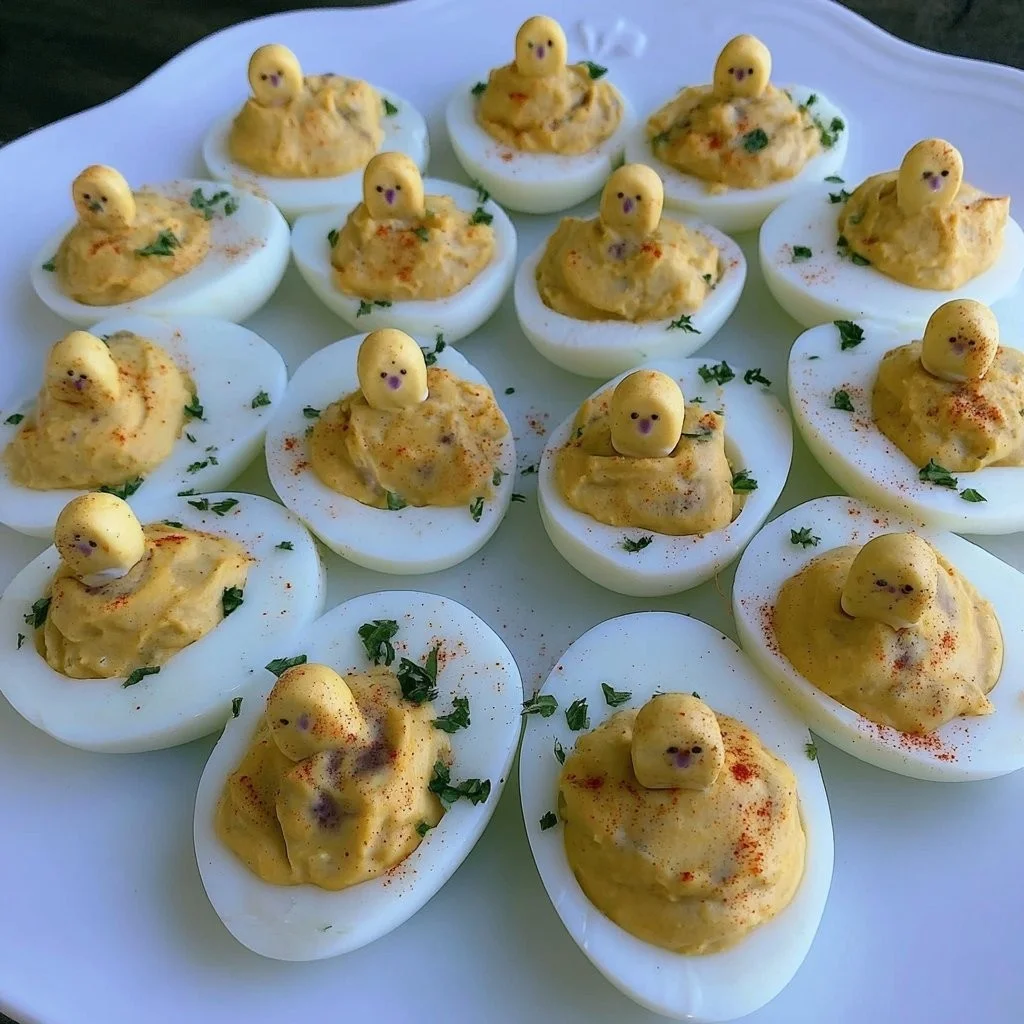
Newborn Baby Deviled Eggs pair classic creamy yolk filling with a playful carriage-like presentation using Vienna sausage slices and delicate white sprinkles for “eyes.” The mayo-and-mustard filling keeps the flavor bright and familiar, while the little sausage detail transforms ordinary deviled eggs into a themed showpiece. These are exceptionally make-ahead friendly and travel well to a venue, making them ideal for a baby shower spread. They feel elevated and whimsical without demanding advanced techniques — one small decorative trick invites curiosity and charm on the buffet.
Ingredients You’ll Need for Newborn Baby Deviled Eggs
Below I expand the ingredient list, adding context so you can shop confidently for a gathering.
Essentials
- 18 large eggs, hard-boiled
- Use the freshest eggs you find, but slightly older eggs peel more easily after boiling. Plan for about 1–2 eggs per guest as part of a larger spread.
- 1/2 cup mayonnaise
- I prefer a high-quality, neutral-tasting mayonnaise for a silky texture.
- 1/2 cup yellow mustard
- Classic yellow mustard keeps the filling bright and slightly tangy; Dijon is an optional swap (see Substitutions).
- Salt and freshly ground black pepper, to taste
- Taste the filling and season gently — you can always add more.
- Up to 1/4 teaspoon smoked or sweet paprika (optional)
- A dusting adds color and a whisper of warmth.
- 5–6 Vienna sausages (one 5–6oz can), sliced into 1/4-inch rounds
- Vienna sausages form the “carriage” base; they’re mild in flavor and very easy to work with.
- White sprinkles (tiny round sugar pearls or nonpareils) for “eyes”
- These tiny, edible accents give personality to each baby figure.
Optional Add-ons
- Chives, very thinly sliced, for a fresh green garnish — sprinkle sparingly.
- A few cornichons or small dill pickles, sliced thinly, for a tangy contrast on the platter.
- Smoked paprika instead of sweet paprika for a subtle smoky note.
- A few drops of white vinegar or lemon juice in the filling if you prefer a brighter finish.
- Microgreens or small edible flowers for an elevated serving board aesthetic.
These touches add texture and color while keeping the recipe approachable for hosts who want a little flourish without complexity.
Substitutions and Shortcuts
- Mayonnaise swap: If you prefer lighter fare, use half mayonnaise and half plain Greek yogurt for a tangy, creamy filling. The consistency remains pipeable with a slightly fresher flavor.
- Mustard swap: Dijon mustard lends a sophisticated tang; honey mustard softens the sharpness for guests who favor milder flavors.
- Vienna sausage shortcut: If you can’t find Vienna sausages, use small cocktail sausages or tiny slices of fully cooked chicken sausage (ensure they’re mild and gluten-free). The visual will be slightly different but still charming.
- Pre-peeled eggs: Many stores sell pre-cooked, peeled eggs in the refrigerated section — a major time-saver for large parties.
- Piping shortcut: Use a resealable plastic bag with a corner snipped off instead of a pastry bag; it’s sturdier than you might expect and easier to handle while prepping multiple eggs.
- Make-ahead tip: You can boil, peel, and slice the eggs one day ahead, store whites and yolk mixture separately, and assemble the same day. This preserves visual freshness.
All swaps keep the recipe baby-shower appropriate and avoid pork or alcohol ingredients, while balancing practicality and presentation.
How to Make Newborn Baby Deviled Eggs Step-by-Step
I guide you through every step with calm clarity so your kitchen feels organized and confident. This recipe is naturally gluten-free, and I’ll point out the small techniques that help even beginners achieve polished results.
Hard-boil the eggs with confidence
- Place the 18 eggs in a single layer in a large saucepan and cover with cold water by about an inch. Bring to a gentle boil, then immediately turn off the heat and cover the pot. Let the eggs sit for 10–12 minutes for firm, fully set yolks. This gentle residual-heat method gives consistent results and reduces risk of overcooking.
- Why it matters: Overcooked yolks develop a green ring and a sulfuric smell; this method keeps yolks tender and easy to mash.
Cool and peel carefully
- Drain the hot water and immediately transfer the eggs to an ice bath or run under very cold water until completely cooled. Tap each egg gently on the counter and roll to crack the shell all over, then peel under cold running water to ease the membrane away.
- Why it matters: Rapid cooling helps the egg white contract away from the shell and makes peeling smoother — essential when you’re preparing many eggs for a celebration.
Halve the eggs precisely for a sculpted look
- Slice each egg lengthwise, aiming for one half to be slightly larger than the other. This makes a natural “carriage” shape when assembled. Slice the smaller halves once more crosswise so the tiny half pieces will become the “blanket” over the sausage.
- Why it matters: Uniform cutting makes assembly quicker and ensures each finished egg looks intentional on the platter.
Make the classic yolk filling
- Carefully remove the yolks from all halves and place them in a medium bowl. Use a fork to mash to a fine crumb. Add 1/2 cup mayonnaise and 1/2 cup mustard, then season with salt and pepper and up to 1/4 teaspoon paprika if using. Mix until completely smooth and creamy.
- Why it matters: Achieving a silky filling makes the finished deviled eggs feel refined. If the mixture seems too thick, a teaspoon or two of milk or lemon juice will loosen it while brightening flavor.
Prepare the Vienna sausage “carriages”
- Slice the Vienna sausages into 1/4-inch rounds; from one sausage you’ll get roughly 5 slices, so plan for 5–6 sausages for your 18 eggs. Place two tiny white sprinkles on each round to suggest eyes; press gently so they adhere.
- Why it matters: The sausage provides a supportive base for the smaller egg white piece and introduces a playful, savory element that contrasts the creamy yolk filling.
Pipe the filling into the larger egg halves
- Transfer the yolk mixture to a piping bag or a sturdy Ziploc with a small angled hole snipped in one corner. Pipe a neat mound into each larger egg half, building a slightly rounded top so the “baby” looks nestled.
- Why it matters: Piping creates a clean, consistent look across all pieces and saves time when you’re working with many eggs.
Assemble the newborn “carriage”
- Place a Vienna sausage slice at the back of each filled egg (this is the carriage base). Lay the small egg white piece you cut earlier over the sausage, slightly overlapping the yolk filling so the figure reads as a tiny newborn wrapped in a blanket and tucked into a carriage.
- Why it matters: This simple three-piece assembly (large white + sausage + small white) creates an evocative silhouette with minimal fuss.
Chill and store before serving
- Arrange finished Newborn Baby Deviled Eggs on a platter, cover tightly, and refrigerate until ready to serve. They’re best within 24 hours for maximum freshness; if assembled the day before, keep them well-covered to prevent drying.
- Why it matters: Chilling helps flavors meld and the filling set slightly so the eggs travel better if you’re transporting them to a shower venue.
Throughout the process I recommend working on a chilled tray or plate if your kitchen is warm; the filling holds its shape better and the eggs remain glossy and attractive for display.
Common Mistakes to Avoid
A few predictable missteps can be learning moments. When you plan intentionally, these simple corrections keep the process smooth and the presentation polished.
Mistake 1: Overcomplicating presentation
It’s tempting to layer on intricate garnishes for a themed event. I recommend letting the newborn carriage motif speak for itself and choosing one or two complementary garnishes (like a few chives or microgreens). Overcrowding the platter can make a refined dish feel cluttered.
Mistake 2: Poor timing and prep planning
Leaving all egg boiling and assembling to the last hour creates stress. I often suggest boiling and peeling eggs the day before, preparing the yolk filling the morning of the event, and assembling an hour or two before guests arrive. This pacing keeps things calm and ensures each egg looks fresh.
Mistake 3: Neglecting serving logistics
Not planning how the eggs will be served — chilled on a platter, on a bed of ice, or passed on trays — can diminish their impact. Think about where drinks and plates will be, and position the platter so guests can see the detail without crowding. If foods will sit out for long, place the platter on a shallow pan of ice for safety and appearance.
Serving Suggestions for Newborn Baby Deviled Eggs
A few thoughtful serving ideas make these Newborn Baby Deviled Eggs feel at home on an elegant shower table.
Begin with a calm presentation philosophy: minimal, cohesive, and seasonal accents let the eggs shine. Simple additions can elevate the tableau without distracting from the delicate detail of the “newborn” motif.
Plating and presentation
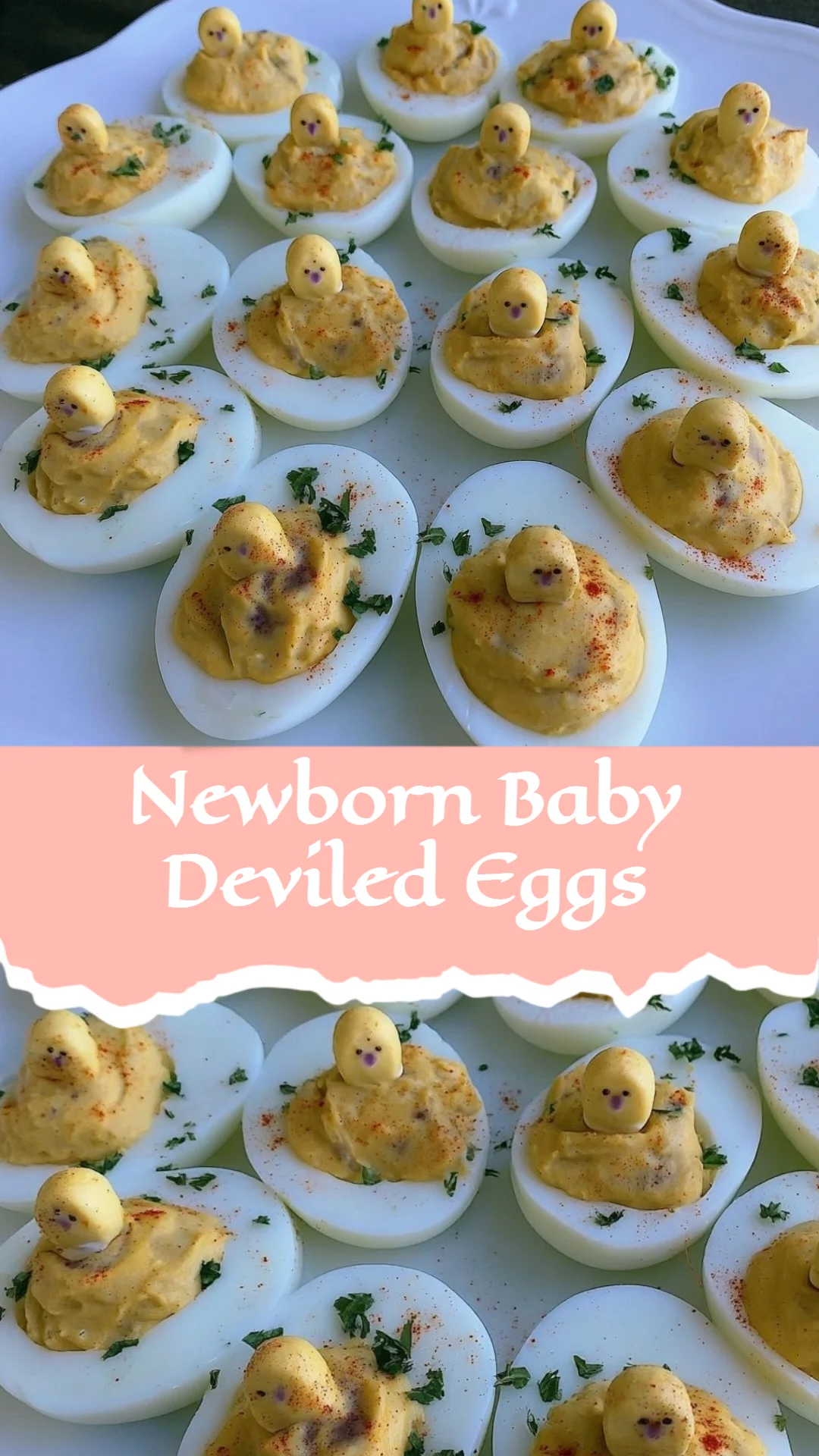
Arrange the eggs on a long white platter or a tiered stand with a soft linen runner beneath. I like to stagger the eggs in rows with a sprig of chive or a scattering of microgreens between them to add vertical contrast and a hint of freshness. Leave a small vintage spoon for guests who prefer to lift their portion gently.
Buffet-style or table-ready serving
On a buffet, place the platter near a small ice bed or a chilled marble slab to keep the eggs cool. Provide small cocktail napkins and toothpicks for guests who want a hands-on option. If you’re seating guests, position a decorative platter at the head table for guests to pass; the visual will become a conversation starter.
Pairing with other baby-shower foods
Balance these savory bites with lighter companions: a simple cucumber and dill salad, a fresh fruit platter with melon and berries, and thinly sliced baguette or gluten-free crackers for guests who want a crunchy contrast. For a sweet counterpoint, offer petite lemon tarts or madeleines to cleanse the palate between savory bites.
Conclusion
I love that Newborn Baby Deviled Eggs transform a classic appetizer into a memorable centerpiece that’s both whimsical and refined. They let you deliver a chef-worthy impression without complicated technique, and they’re flexible enough to suit any color palette or theme. If you’d like a reliable reference version of the idea I adapted here, you can compare notes with the original concept in this Newborn Babies Deviled Eggs (Baby Shower) recipe. Host with confidence — the small details delight, and the gathering will feel lovingly curated.
FAQs About Newborn Baby Deviled Eggs
I typically hard-boil and peel the eggs up to 24 hours ahead. Keep the whites and the yolk mixture stored separately in airtight containers; assemble a few hours before serving for the freshest appearance. If you must assemble a day ahead, cover the platter well and refrigerate — just be mindful that the tiny white sprinkle “eyes” can soften if left too long.
This recipe makes 18 stuffed halves, which will serve about 9–18 guests depending on whether they’re part of a larger buffet. I plan for 1–2 halves per guest as part of a multi-item spread, and increase quantity if the eggs are a featured appetizer.
Store leftover assembled Newborn Baby Deviled Eggs in an airtight container in the refrigerator and enjoy within 24 hours. If you’ve stored whites and filling separately, mixed yolk filling can last about 2 days refrigerated; combine and assemble when you’re ready to serve.
Yes. The recipe is naturally gluten-free as written; for dairy-free adaptations, use a dairy-free mayonnaise. For a lighter option, substitute half the mayonnaise with plain Greek yogurt for a tangy texture. If you prefer to avoid Vienna sausages, substitute mild fully cooked chicken sausage slices or a crisp cucumber round for a vegetarian twist (adjust placement so the “blanket” still sits nicely).
For an elevated finish, pipe the yolk mixture with a star tip for a subtle decorative texture, add a light dusting of smoked paprika, and arrange the platter on a bed of baby greens or edible flowers. Use tiny silver spoons or porcelain appetizer spoons for individual portions to make the presentation feel especially refined.
Newborn Baby Deviled Eggs
Ingredients
Essentials
- 18 large eggs large eggs, hard-boiled Use the freshest eggs; slightly older eggs peel easier.
- 1/2 cup mayonnaise A high-quality, neutral mayonnaise for silky texture.
- 1/2 cup yellow mustard Can substitute with Dijon mustard for a different flavor.
- to taste Salt and freshly ground black pepper Season gently; can always add more.
- up to 1/4 teaspoon smoked or sweet paprika Optional for additional color and warmth.
- 5–6 pieces Vienna sausages, sliced into 1/4-inch rounds Forms the carriage base, mild flavor.
- as needed white sprinkles Tiny round sugar pearls or nonpareils for ‘eyes’.
Optional Add-ons
- Chives, very thinly sliced For a fresh green garnish.
- Cornichons or small dill pickles, sliced thinly For a tangy contrast.
- Smoked paprika Optional substitution for sweet paprika.
- White vinegar or lemon juice For a brighter finish.
- Microgreens or small edible flowers For an elevated serving board aesthetic.
Instructions
Prepare the Eggs
- Place the eggs in a single layer in a large saucepan and cover with cold water by about an inch. Bring to a gentle boil, then turn off the heat and cover. Let them sit for 10-12 minutes for firm yolks.
- Transfer the eggs to an ice bath or cool under cold water until completely cool, then peel under cold running water.
Make the Filling
- Slice each egg lengthwise. Remove yolks and place in a bowl. Mash yolks and mix with mayonnaise, mustard, salt, pepper, and paprika until smooth.
Prepare the Carriage
- Slice Vienna sausages into 1/4-inch rounds and place sprinkles on each round to suggest eyes.
Assemble the Eggs
- Pipe yolk mixture into the larger egg halves. Assemble by placing a sausage slice at the back of the filled egg and topping with a smaller egg piece.
- Arrange finished eggs on a platter, cover, and refrigerate until serving.